
Inside My TechCabal Moonshot Session With Fuad Lawal
I shared my screen and showed people how I run a personal AI operation from Nairobi. Here is what happened.

Last week I did a live online workshop with TechCabal’s Moonshot Platform. I had loads of fun with Fuad Lawal, TechCabal’s Editor in Chief. He gave me the room to shape the direction and share what I do. Thanks Fuad !
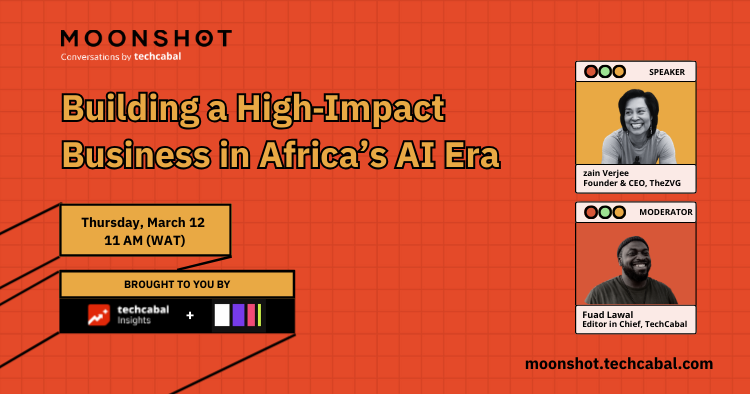
Video of this coming soon
The session was called “Building a High-Impact Business in Africa’s AI Era.” What started as a chat turned into a full screen-share of my personal operation.
Fuad opened by asking about the barriers small businesses face when trying to build in Africa. My expertise is about media, PR, and overall visibility.
Me: “This is what I have observed over the last 10 years plus, when it comes to small businesses on our continent, particularly small firms trying to focus on their own media and communication strategies. The first thing I encounter is that they do not always have a way of telling their story in a way that reaches the audiences that they want…I found that we on our continent, we like our layers, we like our bureaucracy, and we tend to be quite process oriented and maybe too linear and too careful. There is more fear than boldness. And if there is boldness, there is a lack of clarity on how to get there.”
Bureaucracy kills storytelling. AI changes the economics. One person with a system and critical thinking, can do what a small team does.
You do not need a big team. You need a smart system
Fuad asked about how innovation is colliding with the rigid structures in our societies. Here is what I said:
“In a PR or communications firm, or in a newsroom, you have a lot of people to do a lot of things, and everyone has a role. What I have observed with my experience using generative AI for now over two years is that you do not need a team. Actually, all those …skills can be enhanced with technology. I am not saying you replace everyone and put in a tool. I am saying there is a different way to work, and you need a system, not necessarily 15 people to do the same repetitive tasks.”
My CoFounder Thomas Brasington (Thomas builds the engineering layer I cannot) always tell me “If you have a hammer, everything looks like a nail.” We have all these tools now that we can use for a lot of things. But none of these tools will truly help you unless you have a clear problem to solve, a well thought our solution and the knowledge of what tools to use. You need to know what you are looking for and what you are asking it to do.
For now, for non coders like me, it will only take us so far, and at some point we will need an engineer, a software engineer, someone to take us over the line, build specifics that work. We all need to think like product people now, and learn how to ship.
Your domain and cultural context is an unfair advantage
I also have learned that AI does not know Africa as well as we do. “AI does not know Kenya. Does not know Burkina Faso, Lesotho. We do. You do. You know your domain, you know your context, you have knowledge. And that is the opportunity.”
You already know this! You know your specific and local problems. You know what could be a solution, you have the access to knowledge now. Use it.
The screen share
Note I am talking about Claude mainly here because I use it the most. I use all the others to check Claude and play to their strengths
Claude Projects and the Kenya Prompt: I showed my Kenya Prompt project, where I uploaded transcripts of interviews about why foreign businesses fail in Kenya.
I asked it live: “Read everything in projects and tell me what is the number one reason businesses fail in Kenya.” It pulled only from my specific primary interviews. The answer was:
Investors, start ups and mzungus (white pipu) coming in skip cultural integration and rush to execute.
They do not find the gatekeepers of our ecosystem.
They underestimate relationship timelines. Kenya has a relationship-first economy.
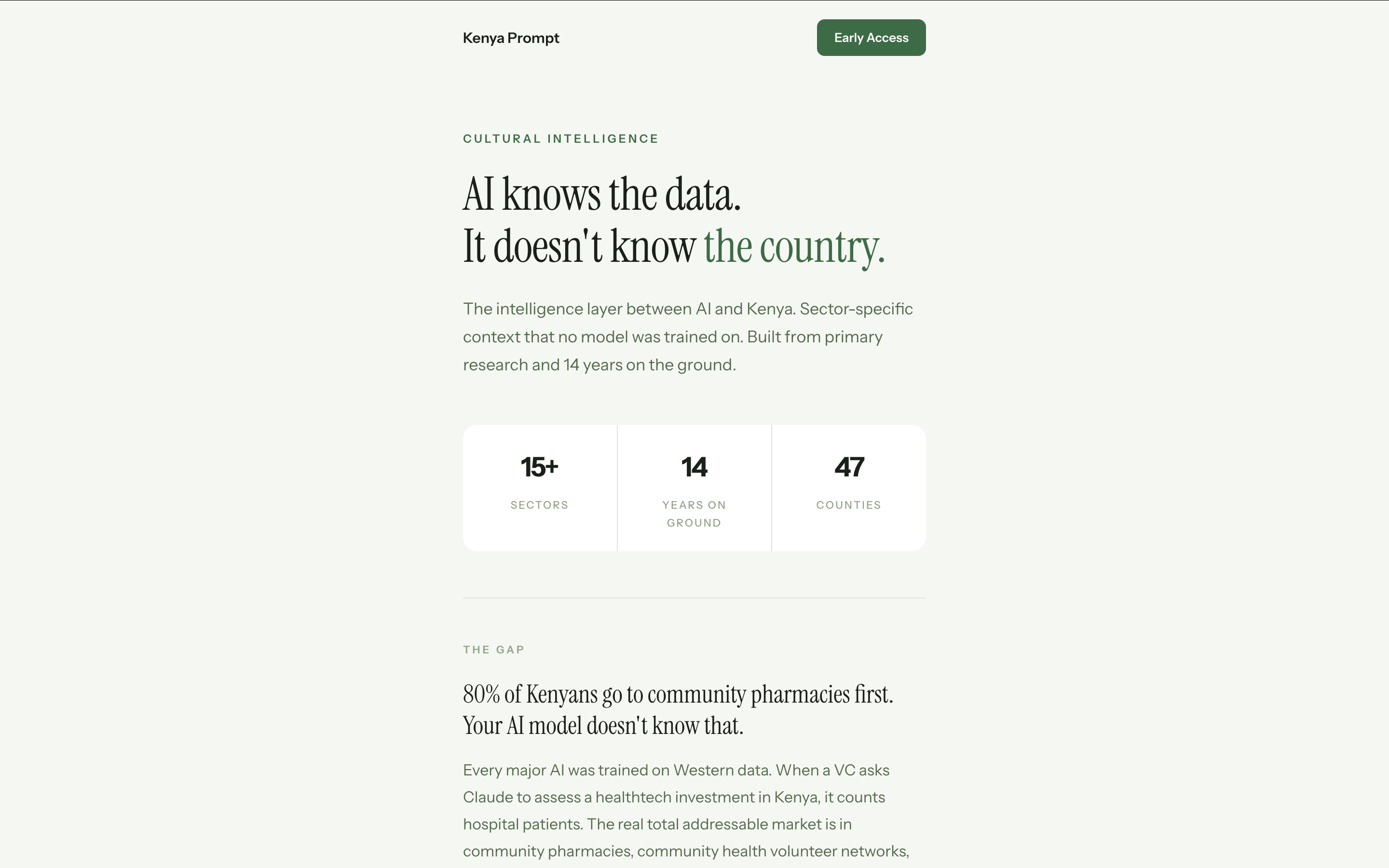
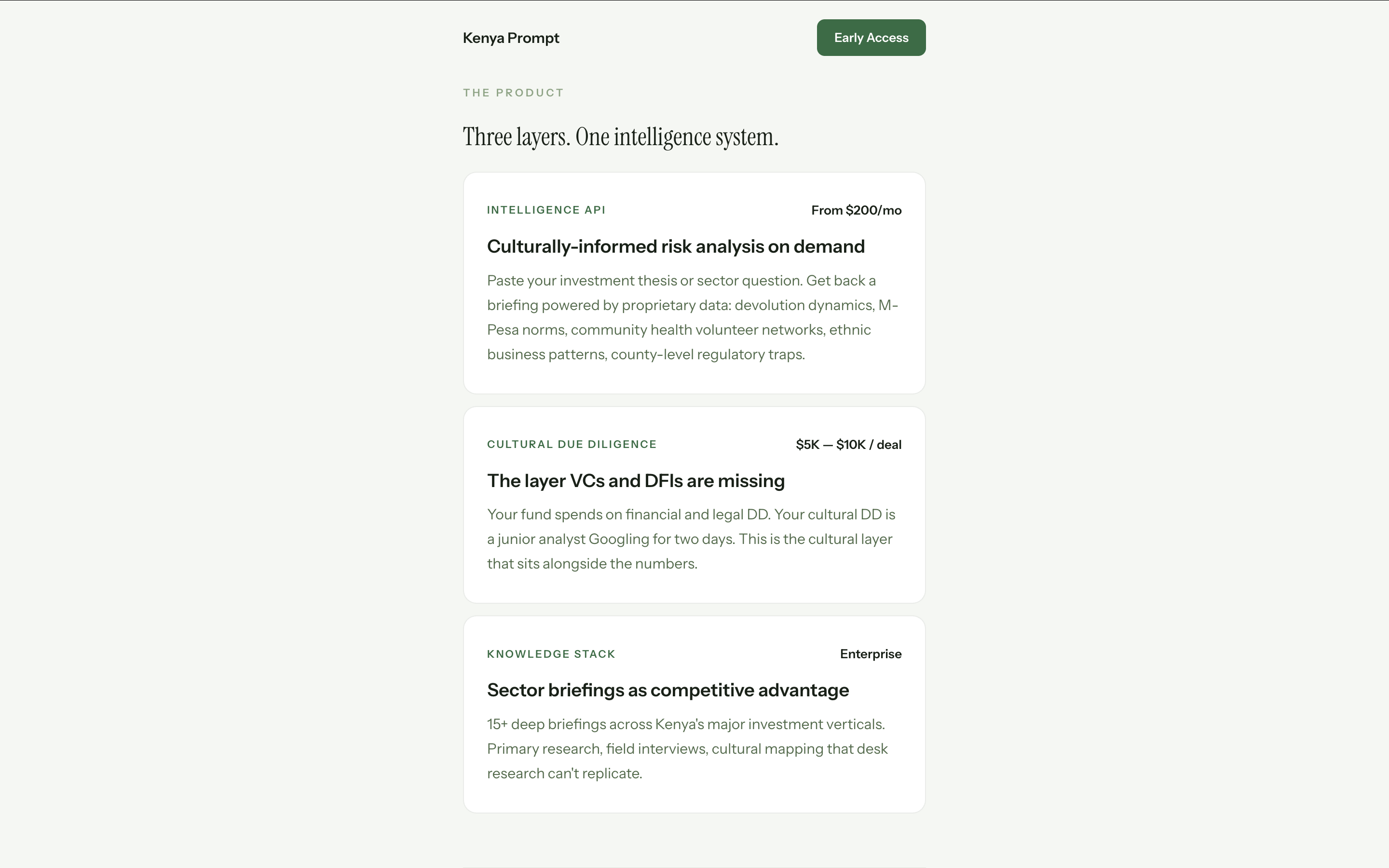
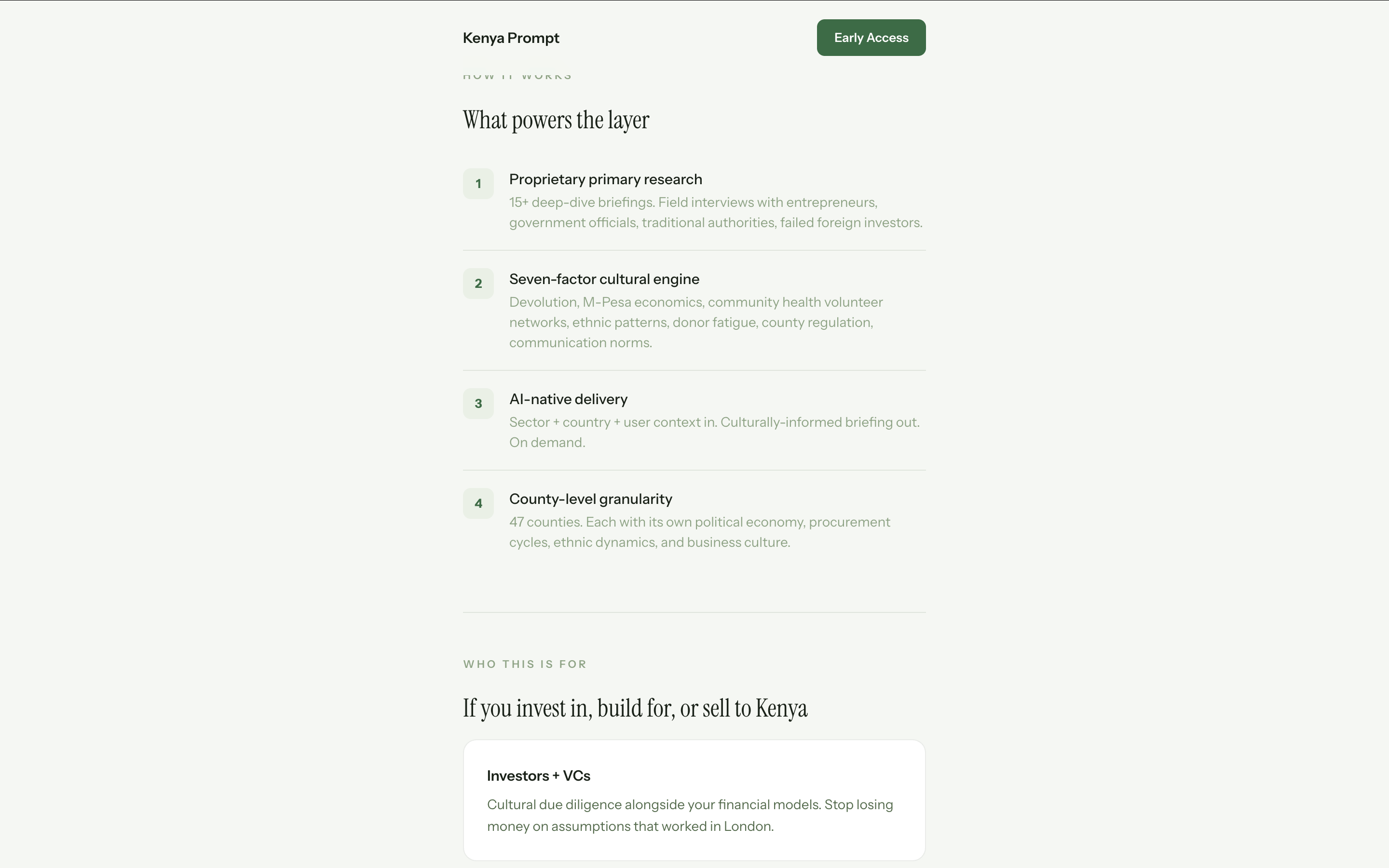
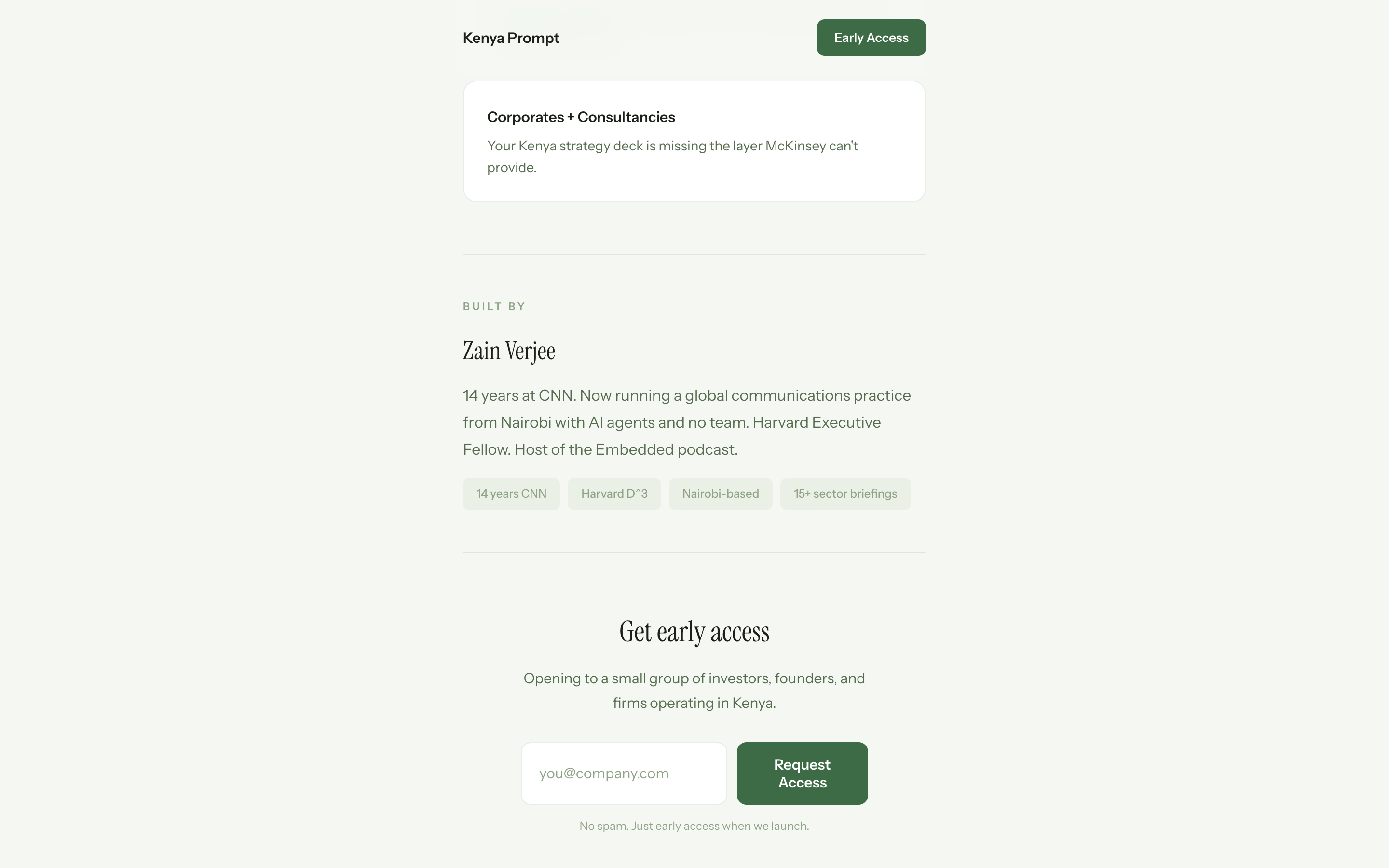
Landing page I’m working on
I’m am Indian-Kenyan in Nairobi. I know my culture.I have a unique experience and perspective. I have a superpower an LLM does not because I viscerally live this. I mapped out what that looks, it’s my domain, in a database.
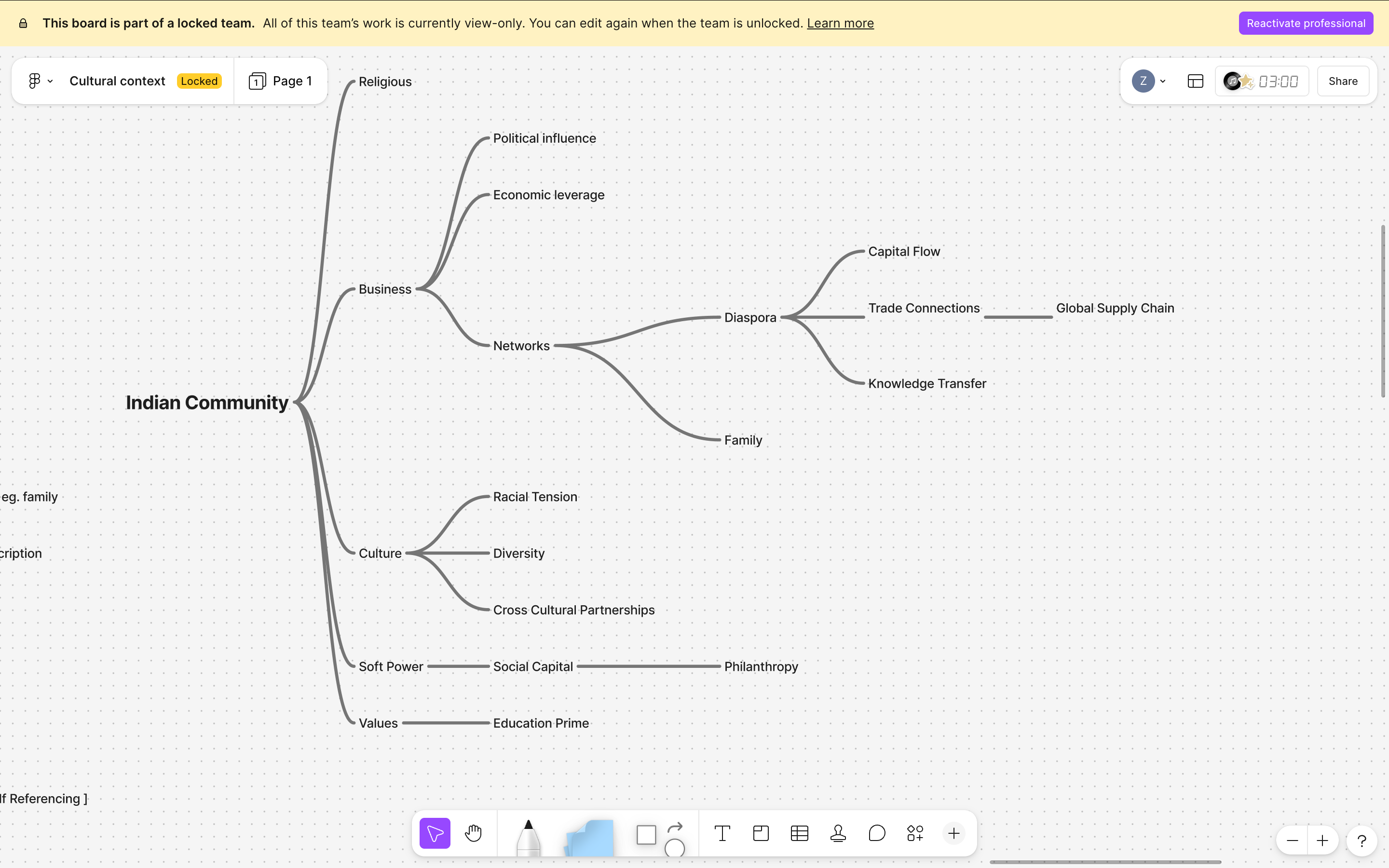
Entity Relationship Diagram
Claude Co-Work and the morning briefing: I showed them that I have scheduled a morning and afternoon briefing that runs automatically every day.
“I built Claude CoWork to do the things I want done in the morning. It reads a document in my folder which I have called the single source of truth. It is called ZAIN_NOW.md. Every session will not have memory, but it will always have the memory of what is in my file.”
I showed the actual dashboard it produces every morning. Top stories filtered through my world. Things to watch, listen, read. All the products I am building. My writing ideas and pipeline. Everything I need to know for the day, visualized, before I have talked to anyone.
“I identified my morning workflow. Grok pushes news to me. Perplexity gives me an intelligence brief. And Claude CoWork does preliminary groundwork for me. And I go over it and start adding my own critical thinking. It prioritizes. It reads my calendar. It looks at email. It gives me what I, Zain, want to see in the morning in five minutes.”
The operating file — ZAIN_NOW.md: I pulled up the actual file. I showed everyone my raw instructions.
You are Zain Verjee’s Chief of Staff. This is your memory and your briefing book. Read this entire file before you say a single word. When Zain opens a new session, even if she just says hi, your first action is to read everything and greet her like a chief of staff with a real briefing. Do not just say good morning. You failed if you say good morning.
Pipu laughed. But they got it. This is not a chatbot. This is an operating system.
I have created different experts and AI workers driven by prompts each of which can have a personality that I have developed. They do the work. The human being (me) with creativity, cultural context and intelligence and empathy and human connection, decides what I want, do not want and what needs to be verified.
The Notion operational cockpit: I showed my Notion workspace that I built using Claude’s MCP connection. Morning flow, afternoon flow, agent team. “I wrote prompts that told AI exactly how to build my Notion workspace. Ten agents. A morning sequence.”
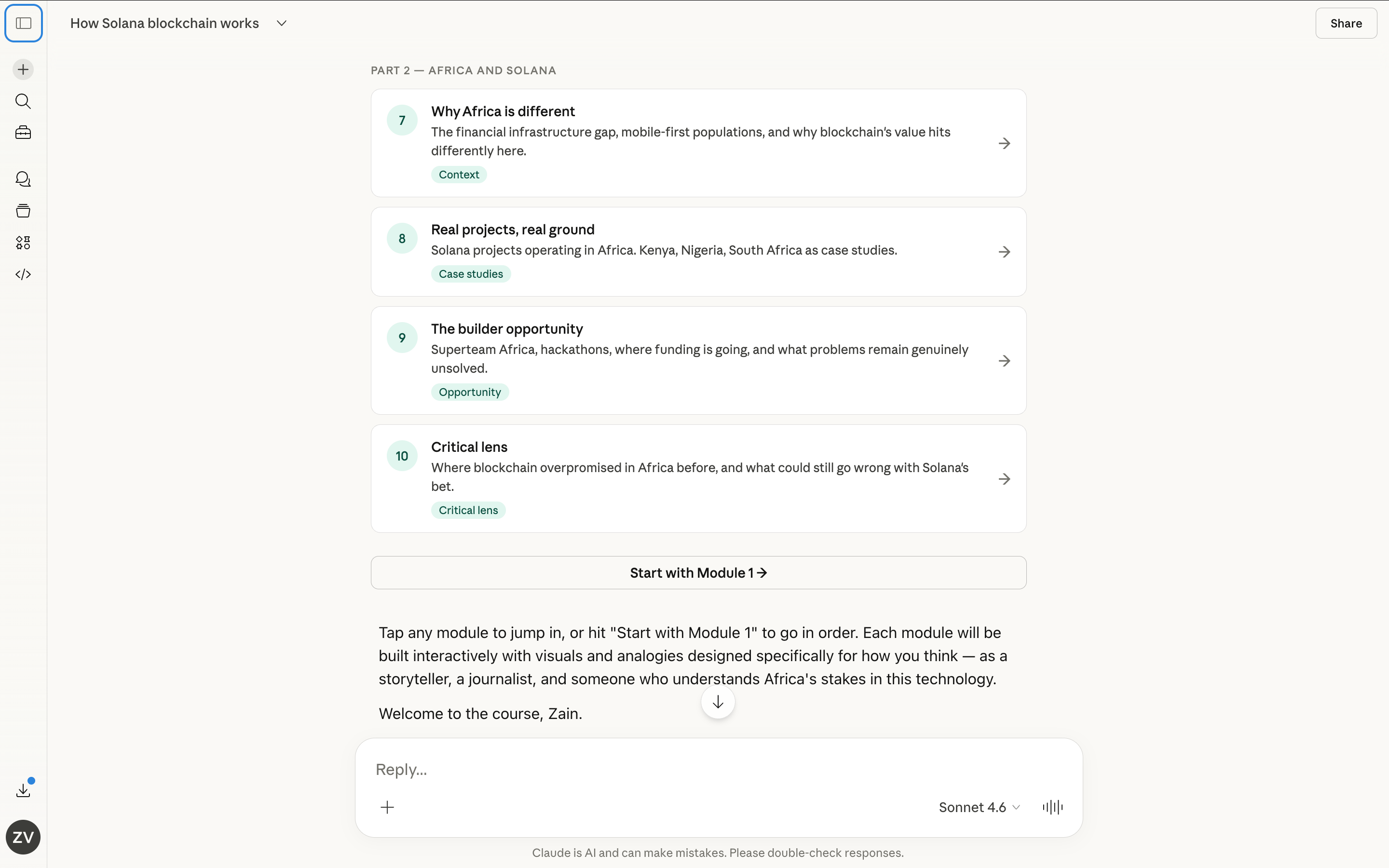
Using Claude to build my own courses: Something I did not show the room but want to share here. I have been using Claude “learning” to design entire learning courses for myself. Not watching a course.
Building one. I outlined a full course on the Solana blockchain and its relevance to Africa. Modules, curriculum, reading lists, quizzes. Claude structured it. I directed it. I am teaching myself by building the course I wish existed.
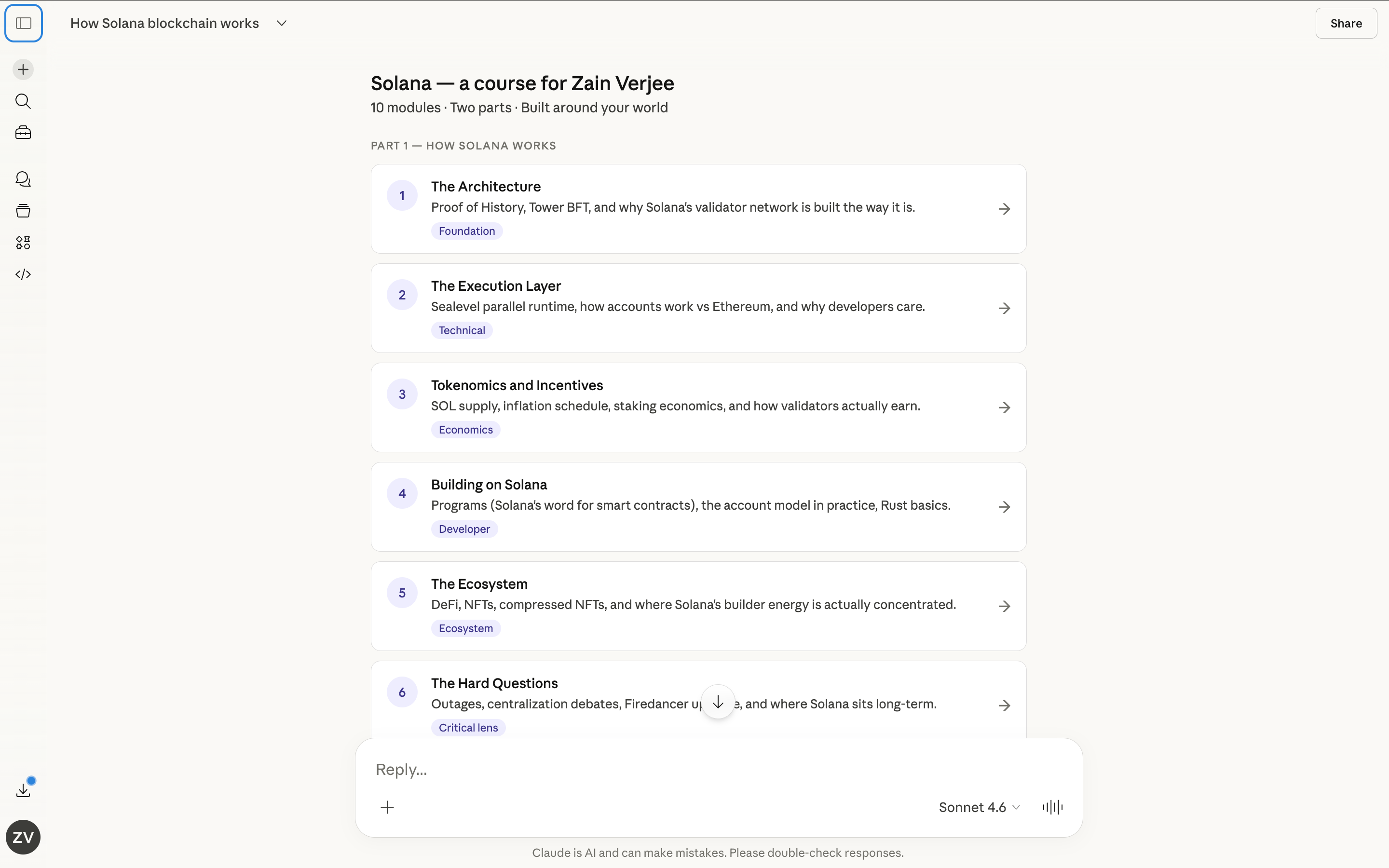
This is a use case most people do not think about. You do not need to buy a course. You can build one tailored to exactly what you need to learn, at your level, in your context.
I showed my NotebookLM I use for self education as well as product research. This is the very best product out there in my view. I uploaded more than 50 research files about the Kenyan market and it found the failure patterns I could not see on my own by mapping it out with the tools there and listening to a generated podcast based on my data while going for a run.
The live content engine demo
Claude Skills: I showed the room how Claude now has built-in skills for marketing, internal comms, design, branding. “I have done my own content skill engine using some of the templates here, and I am building things that work for me. You are able to customize skills.”
Fuad pasted a Kenya Commercial Bank article into the chat. I ran it through my personally designed content engine skill. “I have envisioned my own content strategy, and I have used AI, and I have developed a prompt that if you give me one piece of content, it is going to do lots of things.”
The room watched five agents work behind the scenes.
One did sourcing inventory.
One found scroll-stopper quotes.
One identified everyone mentioned for amplification.
One positioned it in the news cycle.
One generated stat cards, a LinkedIn post, a WhatsApp message, a video script, YouTube Shorts riff points, an audio version in my voice, and an op-ed pitch if I want it.
All from one article. All using my voice matrix and intelligence layer. You can fry this however you want depending on how your organization works.
Then I showed the prompt that powered it. My voice matrix. The brand personality. How I tried to replicate me. My tone, my thinking. The tone adaptation by channel. It’s not perfect but I am refining it. It’s getting there. Pole Pole. Slowly. I showed on screen what most people never share. “We must all share knowledge with one another on our continent so we can lift each other up.”
What TechCabal is already doing
The exchange went both ways. Fuad shared how TechCabal uses AI in production:
“A very specific way I always tell the team to think about these tools is that they either help you improve the quality of an experience or accelerate the workflow. We have a very busy engineering team. Every time we say we would like to build this tool, they say come back in five weeks. What we have done is learn how to build those things in Gemini and embed them in articles.”
They use LLMs to accelerate fact-checking. “It tracks out claims and finds the sources and uses our own sources and verifies everything. It just makes it move faster.”
That is a real newsroom, already doing this. Not hypothetically. In production.
What is coming for paid subscribers
On Friday I am releasing the My Content Engine. This is the actual framework behind what I showed at the Moonshot chat. The content engine demo that ran in front of the room took less than 5 minutes to produce ten derivative pieces from one article. The Engine is the system behind it. The voice matrix is what makes it sound like mimi. (me)
That drops Friday for paid subscribers only.
Join our exclusive group with a paid sub. $15 a month-o. Thank you !